Have you ever wondered why some websites effortlessly climb to the top of Google while yours stays hidden on page ten? It is not just about luck or having a fancy design. It is about how well you guide search engines through your valuable content.
Mastering on-page SEO optimization is the secret to making your digital home stand out in a crowded market. This process helps your site speak the right language to rank higher and reach your target audience. Think of it as placing bright signs in a thick fog to lead customers straight to your door.
Effective search engine optimization helps you connect with people who are already looking for what you offer. This strategic approach transforms your site into a beacon for qualified traffic. It ensures your message reaches the right ears and drives real results for your brand.
Improving your digital presence does not have to be a mystery. By following simple steps, you can create a user experience that both humans and algorithms will love. Are you ready to dive in and unlock your site’s full potential?
Key Takeaways
- Identify how to fine-tune individual web pages for better reach.
- Attract visitors who are genuinely interested in your products.
- Improve rankings by making content easier for crawlers to read.
- Discover why high-quality titles and descriptions matter for clicks.
- Learn how user behavior impacts your overall digital success.
- Build a strong foundation for long-term growth and authority.
What Is On-Page SEO and Why It Matters for Your Website
On-page SEO is a fundamental aspect of digital marketing that directly impacts a website’s visibility. It involves optimizing various elements on a website to make it search engine friendly, thereby improving its ranking and driving more organic traffic.
Understanding the Fundamentals of On-Page SEO
On-page SEO encompasses a range of techniques and strategies aimed at optimizing individual web pages to rank higher in search engines. This includes optimizing content, meta tags, titles, URLs, and internal linking, among other factors. Efficient on-page SEO requires a deep understanding of how search engines work and what they look for in a website.
The core elements of on-page SEO can be broken down into several key areas:
- Content quality and relevance
- Keyword research and optimization
- Meta tags and title optimization
- URL structure and internal linking
- Mobile-friendliness and page speed
How On-Page SEO Differs from Off-Page SEO
On-page SEO is often contrasted with off-page SEO, which involves factors outside of a website’s control, such as backlinks from other sites and social media presence. While off-page SEO is crucial for a website’s overall SEO strategy, on-page SEO lays the foundation by making the site search engine friendly.
| SEO Aspect | On-Page SEO | Off-Page SEO |
|---|---|---|
| Control | Elements within the website’s control | Factors outside the website’s control |
| Key Factors | Content, meta tags, URL structure | Backlinks, social media presence |
| Objective | Make the website search engine friendly | Build the website’s authority and reputation |

The Impact on Search Rankings and Organic Traffic
Effective on-page SEO can significantly improve a website’s search engine rankings, leading to increased organic traffic. By optimizing on-page elements, websites can better communicate their relevance to search engines, thereby enhancing their visibility in search results.
A well-implemented on-page SEO strategy can result in:
- Higher search engine rankings
- Increased organic traffic
- Better user experience
- Improved conversion rates
Mastering Keyword Research for On-Page SEO Optimization
Effective keyword research is the cornerstone of a successful on-page SEO strategy. It involves more than just identifying popular search terms; it’s about understanding your audience, their search behavior, and the competitive landscape.
Identifying the Right Keywords for Your Content
The first step in keyword research is to identify keywords that are relevant to your content and have a reasonable search volume. This involves brainstorming a list of potential keywords and then analyzing them for their potential.
Analyzing Your Competition
Understanding your competition is crucial. By analyzing the keywords your competitors are targeting, you can identify gaps in the market and opportunities to outrank them. Tools like SEMrush and Ahrefs can provide valuable insights into competitor keyword strategies.
Finding Low-Competition Opportunities
Targeting low-competition keywords can be a strategic move, especially for new websites or those with limited authority. These keywords may have lower search volumes but are often less competitive, making it easier to rank higher in search engine results.
Understanding Search Intent and User Behavior
Search intent refers to the reason behind a user’s search query. Understanding whether a user is looking for information, seeking to make a purchase, or navigating to a specific site is crucial for creating content that meets their needs.
Informational vs. Transactional Intent
Keywords can be broadly categorized into informational and transactional intents. Informational keywords indicate a user is seeking knowledge, while transactional keywords suggest a user is ready to make a purchase. Tailoring your content to match the search intent can significantly improve its effectiveness.
Using Keyword Research Tools Effectively
Keyword research tools like Google Keyword Planner, SEMrush, and Ahrefs are indispensable for identifying potential keywords, analyzing competition, and understanding search volume. These tools can help refine your keyword strategy and identify new opportunities.
Long-Tail Keywords vs. Short-Tail Keywords
Long-tail keywords are more specific phrases with lower search volumes, while short-tail keywords are broader and more competitive. Long-tail keywords can be less competitive and more targeted to specific search queries, making them valuable for attracting relevant traffic.
By mastering keyword research, you can create a robust on-page SEO strategy that drives targeted traffic to your website and improves your search engine rankings.
Optimizing Title Tags and Meta Descriptions
Title tags and meta descriptions are vital elements of on-page SEO that can significantly impact your website’s search engine performance. These two components provide search engines with crucial information about your webpage’s content and purpose.
Crafting Compelling Title Tags That Rank
A well-crafted title tag is essential for both search engines and users, as it summarizes the content of the webpage. To maximize its effectiveness, consider the following aspects:
Incorporating Primary Keywords Naturally
Including your primary keyword in the title tag is crucial, but it should be done naturally. The title should be descriptive and appealing, making it more likely that users will click on it. For instance, if your primary keyword is “SEO techniques,” a good title could be “Mastering SEO Techniques for Better Search Rankings.”
Creating Click-Worthy Headlines
Your title tag should not only include relevant keywords but also entice users to click. Using action-oriented language or questions can make your title more compelling. For example, “Unlock the Secrets to Effective SEO: Top Techniques Revealed” can pique the interest of potential readers.
Writing Meta Descriptions That Drive Clicks
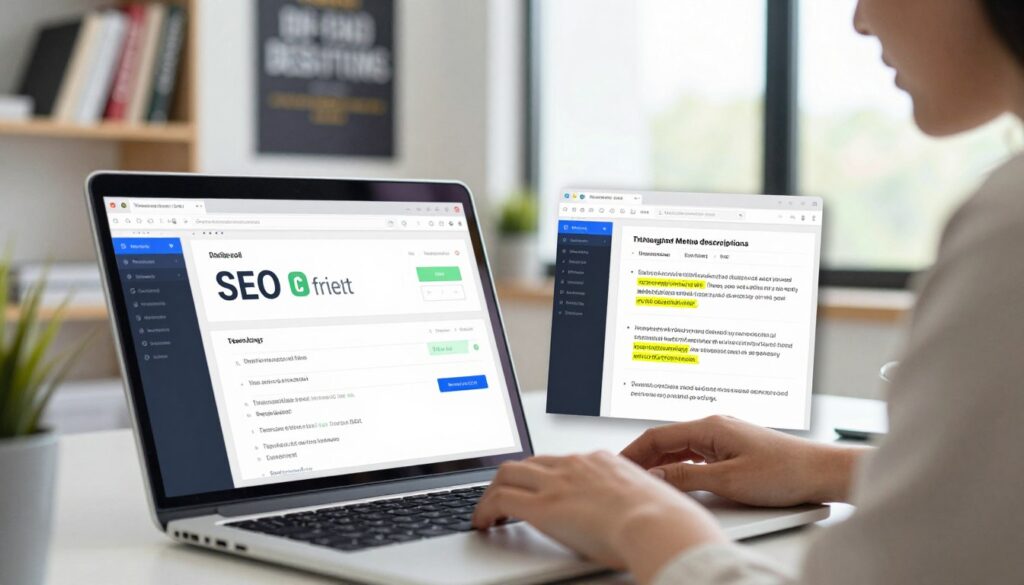
Meta descriptions provide a brief summary of your webpage’s content. A well-written meta description can significantly influence click-through rates from search engine results pages (SERPs).
Including Call-to-Action Phrases
Incorporating call-to-action (CTA) phrases in your meta description can encourage users to click on your link. Phrases like “Learn more,” “Discover how,” or “Get started today” can make your listing more appealing. For example, “Discover the ultimate guide to SEO success – Learn more about our top SEO techniques!“
Character Limits and Best Practices
Both title tags and meta descriptions have character limits that should be adhered to for optimal display in SERPs. Title tags should ideally be under 60 characters, while meta descriptions should be around 155-160 characters. Ensuring that your title tags and meta descriptions are within these limits can prevent them from being truncated, making them more effective.
By following these guidelines and best practices, you can optimize your title tags and meta descriptions to improve your website’s SEO performance and attract more visitors.
Creating SEO-Friendly Content That Engages Readers
Crafting content that resonates with both search engines and human readers is a delicate balance that can significantly enhance your website’s visibility. To achieve this balance, it’s essential to understand the principles of content optimization and how they intersect with SEO best practices.
Effective content optimization is not just about incorporating keywords; it’s about creating a narrative that engages your audience while also satisfying search engine algorithms. This involves structuring your content in a way that is both readable and optimized for search engines.
Structuring Your Content for Readability and SEO
A well-structured article is crucial for both user experience and search engine ranking. This can be achieved by using short paragraphs, bullet points, and the inverted pyramid method.
Using Short Paragraphs and Bullet Points
Breaking up your content into short paragraphs and using bullet points can significantly enhance readability. This format allows readers to quickly grasp the main points of your content, improving their overall experience.
- Use short paragraphs to convey information concisely.
- Bullet points are ideal for listing items or highlighting key information.
Implementing the Inverted Pyramid Method
The inverted pyramid method involves presenting the most critical information at the beginning of your content, followed by supporting details. This approach not only aids readability but also helps in capturing the reader’s attention from the outset.
Strategic Keyword Placement Without Stuffing
Keyword placement is a critical aspect of SEO. However, it’s essential to strike a balance between optimizing for keywords and maintaining a natural flow.
Keyword Density Guidelines
Aim for a keyword density of around 1-2%. This means using your primary keyword once or twice per 100 words. Overusing keywords can lead to keyword stuffing, which is penalized by search engines.
Using Semantic Keywords and Synonyms
Incorporating semantic keywords and synonyms can enhance your content’s relevance and help you rank for related searches. This approach also aids in avoiding repetition and making your content more engaging.

Using Header Tags to Organize Information
Header tags (H1, H2, H3, etc.) play a crucial role in organizing your content and highlighting key points. They help search engines understand the structure of your page and can improve your content’s visibility in search results.
Writing Content That Satisfies Search Intent
Understanding and satisfying search intent is paramount. Your content should provide value to the reader by answering their query or solving their problem. This not only improves user experience but also enhances your content’s relevance and ranking potential.
By focusing on these aspects, you can create content that is both SEO-friendly and engaging for your readers, ultimately boosting your website’s visibility and performance.
Image Optimization Techniques for Better Performance
To boost your website’s SEO, it’s essential to understand the importance of image optimization techniques. Images are a crucial part of web content, enhancing user experience and engagement. However, they can also significantly impact page load times and search engine rankings if not optimized properly.
Choosing the Right Image File Formats
Selecting the appropriate image file format is the first step in image optimization. Different file formats offer varying levels of compression and quality.
WebP vs. JPEG vs. PNG
WebP, JPEG, and PNG are among the most commonly used image file formats. WebP offers superior compression and is supported by most modern browsers, making it an excellent choice for web images. JPEG is ideal for photographs, as it supports a wide range of colors, while PNG is better suited for graphics and images that require transparency.
The choice of file format can significantly affect your website’s performance. For instance, using WebP can reduce image file sizes by up to 30% compared to JPEG and PNG, leading to faster page loads.
Compressing Images Without Losing Quality
Compressing images reduces their file size, which in turn improves page load times. It’s crucial to compress images without compromising their quality.
Recommended Compression Tools
Several tools are available for compressing images, including TinyPNG, ImageOptim, and ShortPixel. These tools use various algorithms to reduce file sizes while maintaining image quality. For example, TinyPNG uses a combination of lossy and lossless compression techniques to achieve significant file size reductions.
- TinyPNG
- ImageOptim
- ShortPixel
Writing Effective Alt Text for Accessibility and SEO
Alt text is crucial for both accessibility and SEO. It provides a description of the image for users who cannot view it and helps search engines understand the image content.
Alt Text Best Practices
When writing alt text, be descriptive and concise. Include relevant keywords, but avoid keyword stuffing. For example, if you’re optimizing an image of a sunset, your alt text could be “sunset over the ocean with vibrant colors.”
Implementing Descriptive File Names
Using descriptive file names for your images is another important aspect of image optimization. Instead of using generic names like “image1.jpg,” use descriptive names that include target keywords, such as “sunset-over-ocean.jpg.”
This not only helps search engines understand the content of the image but also improves the organization of your website’s media files.
URL Structure and Internal Linking Strategies
Effective URL structure and internal linking are foundational elements of a successful SEO strategy, impacting both user experience and search engine crawling. A well-planned URL structure helps search engines understand your website’s hierarchy, while internal linking aids in navigating and distributing link equity across your site.
Creating Clean and Descriptive URLs
Clean and descriptive URLs are not only user-friendly but also improve your website’s crawlability. They should accurately describe the content of the page.
Avoiding Special Characters and Numbers
It’s best to avoid using special characters and numbers in your URLs as they can make them look spammy and are often harder for users to remember. Instead, opt for descriptive words separated by hyphens.
Keeping URLs Short and Meaningful
While it’s essential to be descriptive, it’s equally important to keep your URLs concise. Aim for a balance between brevity and descriptiveness to enhance user experience and SEO.
Building an Effective Internal Linking System
Internal linking is a powerful tool that helps search engines understand your site’s structure and content hierarchy. It also facilitates user navigation, improving overall engagement.
Linking to Relevant Content
When linking internally, ensure that you’re pointing to relevant and useful content. This not only enhances user experience but also helps in distributing link equity effectively.
Distributing Link Equity Throughout Your Site
Strategic internal linking can help distribute link equity across your website, strengthening the ranking potential of your pages. Focus on linking to important pages from various relevant locations.
Using Anchor Text Strategically
The anchor text of your internal links should be descriptive and relevant to the page it’s linking to. Avoid using generic text like “click here” and instead opt for text that informs users what to expect.

By implementing these strategies, you can significantly improve your website’s SEO, making it more accessible to both users and search engines. This, in turn, can lead to better rankings and increased organic traffic.
Technical On-Page SEO Elements You Can’t Ignore
To maximize your website’s potential, it’s essential to focus on the technical aspects of on-page SEO optimization. While content is a critical component, technical SEO ensures that search engines can crawl, index, and rank your site effectively.
Improving Page Load Speed
Page load speed is a critical factor in both user experience and search engine rankings. A slow-loading website can lead to higher bounce rates and lower rankings.
Minimizing HTTP Requests
One effective way to improve page load speed is by minimizing HTTP requests. This can be achieved by reducing the number of elements on your page, such as scripts and stylesheets.
Leveraging Browser Caching
Leveraging browser caching allows frequently-used resources to be stored locally in a user’s browser, reducing the need for repeat requests to your server. This can significantly improve page load times for returning visitors.
According to Google, “browser caching can significantly improve page load times.” By implementing caching strategies, you can enhance your website’s performance and user experience.
Making Your Website Mobile-Friendly
With the majority of internet users accessing websites through mobile devices, having a mobile-friendly website is no longer optional. A responsive design ensures that your website adapts to different screen sizes and devices.
Responsive Design Principles
Responsive design involves using flexible grids, images, and media queries to create a seamless user experience across various devices. This approach not only improves user engagement but also enhances your website’s search engine ranking.
“A responsive design is not just about aesthetics; it’s about providing a better user experience across all devices.”
Implementing Schema Markup
Schema markup is a form of microdata that helps search engines understand the context and content of your webpage. By implementing schema markup, you can enhance your website’s visibility in search results.
Common Schema Types for Websites
There are various schema types that can be applied to different types of content, such as reviews, events, and business hours. Using the right schema type can improve your website’s search engine ranking and drive more targeted traffic.
| Schema Type | Description | Example |
|---|---|---|
| Review | Used for customer reviews and ratings | Product review with 5-star rating |
| Event | Used for events and conferences | Upcoming concert with date and location |
| Business Hours | Used for displaying business hours | Store hours: Mon-Sat 9am-7pm |
Optimizing for Core Web Vitals
Core Web Vitals are a set of metrics that measure the user experience of a webpage, including loading performance, interactivity, and visual stability. Optimizing for Core Web Vitals can improve your website’s search engine ranking and user engagement.
By focusing on these technical on-page SEO elements, you can significantly improve your website’s visibility, user experience, and search engine ranking. Regularly monitoring and optimizing these elements will help you stay ahead in the competitive digital landscape.
Content Optimization Beyond Keywords
Optimizing content goes beyond just keywords; it’s about creating a comprehensive user experience. Effective content optimization involves several strategies that enhance the quality, relevance, and engagement of your content.
Updating and Refreshing Existing Content
One crucial aspect of content optimization is updating and refreshing existing content. Over time, content can become outdated, and statistics or information may no longer be relevant.
Identifying Content That Needs Updating
To identify content that needs updating, review your existing content regularly. Look for pieces with outdated statistics, broken links, or those that no longer align with current trends or user intent.
Use tools like Google Analytics to identify underperforming content that could benefit from an update.
Adding New Information and Statistics
Once you’ve identified content that needs updating, incorporate new information and statistics to make it more relevant and valuable to your audience.
This not only improves the content’s quality but also enhances its visibility in search engine results.
| Content Type | Update Frequency | Benefits of Update |
|---|---|---|
| Blog Posts | Quarterly | Improved relevance, better SEO |
| Product Descriptions | Bi-annually | Enhanced accuracy, increased conversions |
| Resource Pages | Annually | Updated information, improved user trust |
Adding Multimedia Elements for Engagement
Multimedia elements such as videos, infographics, and images can significantly enhance user engagement.
Incorporating Videos and Infographics
Videos and infographics are highly engaging and can convey complex information in an easily digestible format.
For example, incorporating a video tutorial on a how-to topic can increase user engagement and reduce bounce rates.
Improving Content Depth and Quality
Improving content depth and quality involves providing comprehensive and valuable information that meets the needs of your audience.
Conduct thorough research to ensure that your content is accurate, informative, and relevant.
Use a mix of short and long-tail keywords naturally within your content to enhance its visibility without compromising readability.
Measuring Your On-Page SEO Success
To determine the effectiveness of your on-page SEO efforts, it’s crucial to track specific metrics. By monitoring these key performance indicators, you can gain insights into how well your website is performing and identify areas for improvement.
Key Performance Indicators to Track
Several key performance indicators (KPIs) are essential for evaluating the success of your on-page SEO strategy. These include:
Organic Traffic Growth
Monitoring the growth of organic traffic to your website is a fundamental aspect of measuring on-page SEO success. Organic traffic growth indicates how well your SEO efforts are working in terms of attracting more visitors from search engines.
Bounce Rate and Time on Page
Understanding user engagement metrics such as bounce rate and time on page can provide valuable insights into how relevant and engaging your content is to your audience. A lower bounce rate and longer time on page generally indicate that your content is meeting user expectations.
Using Google Analytics and Search Console
Tools like Google Analytics and Google Search Console are indispensable for tracking and analyzing your website’s performance. They offer a wealth of data that can help you refine your on-page SEO strategy.
Setting Up Proper Tracking
To get the most out of Google Analytics and Search Console, it’s essential to set up proper tracking. This includes configuring goals, events, and ensuring that all relevant data is being collected accurately.
Understanding Your Data
Once you have the data, understanding what it means is crucial. Look for trends in your organic traffic, analyze the behavior of users on your site, and adjust your SEO strategy accordingly.
Monitoring Rankings and Organic Traffic
Regularly monitoring your website’s rankings for target keywords and overall organic traffic is vital. This ongoing analysis will help you understand the impact of your on-page SEO efforts and make informed decisions for future optimizations.
By focusing on these key areas and using the right tools, you can effectively measure the success of your on-page SEO efforts and continue to improve your website’s visibility and performance.
Conclusion
Effective on-page SEO optimization is crucial for improving your website’s visibility and search engine ranking. By implementing the strategies discussed, you can significantly enhance your website’s performance and drive more organic traffic.
Mastering keyword research, optimizing title tags and meta descriptions, creating SEO-friendly content, and leveraging technical on-page SEO elements are all vital components of a successful website optimization strategy.
By focusing on these key areas and continually monitoring your website’s performance using tools like Google Analytics and Search Console, you can refine your approach and achieve better results.
With a well-planned on-page SEO optimization strategy, you can increase your online presence, drive more targeted traffic, and ultimately boost your business’s success.
FAQ
What exactly is on-page SEO optimization and why should I care?
Think of on-page SEO optimization as the fine-tuning you do directly on your website to make it more attractive to search engines and users alike. It involves optimizing individual web pages—from the text and images to the underlying HTML code—so they rank higher and earn more relevant traffic. By focusing on these elements, you ensure that Google and Bing can easily understand what your page is about, which is the first step toward reaching the top of the search results!
How does on-page work differ from broader search engine optimization?
While search engine optimization (SEO) is a broad umbrella, on-page efforts are the specific actions you take within your own site. Unlike off-page SEO, which focuses on external signals like backlinks from The New York Times or social media mentions, on-page website optimization is entirely under your control. It’s the foundation that makes all your other marketing efforts more effective.
Why is keyword research the first step in any content optimization strategy?
Keyword research is like a roadmap for your content. By using professional tools like Semrush or Ahrefs, you can discover exactly what terms your audience is typing into search bars. Understanding these terms allows for effective content optimization, ensuring you create articles and guides that provide the exact answers people are looking for, rather than just guessing what might work.
What are meta tags, and how do they impact my click-through rate?
Meta tags, specifically title tags and meta descriptions, serve as your website’s “digital billboard” on search engine results pages. A well-crafted title tag tells search engines what the page is about, while a compelling meta description encourages users to click. Following SEO best practices for these tags—like staying within character limits and including a clear call-to-action—can significantly boost the amount of organic traffic hitting your site.
Can image optimization really help my website perform better?
Absolutely! Image optimization is a vital part of keeping your site fast and accessible. By using modern formats like WebP and tools such as TinyPNG to compress files without losing quality, you improve your page load speed. Additionally, writing descriptive alt text helps search engines “see” your images, which can improve your rankings in image search results.
What are the most effective SEO techniques for improving page readability?
To keep readers engaged, you should use SEO techniques that prioritize user experience. This includes breaking up large chunks of text with descriptive headers (H2s and H3s), using bullet points, and keeping paragraphs short. These steps not only make your content easier to scan for humans but also help search engines identify the hierarchy and most important topics within your writing.
How do I know if my website optimization efforts are actually working?
The best way to track your progress is by using official tools like Google Analytics and Google Search Console. These platforms allow you to monitor your organic traffic, see which keywords are driving the most clicks, and identify any technical issues. Consistently reviewing this data helps you refine your strategy and ensures your on-page SEO optimization continues to deliver a high return on investment.

I am an SEO expert with over 7+ years of hands-on experience in search engine optimization, content strategy, and organic growth. I specialize in creating SEO-driven blog content that helps businesses improve search visibility, attract qualified traffic, and achieve sustainable rankings on Google. With a strong understanding of on-page SEO, keyword research, technical SEO, and content optimization, I focus on delivering data-backed, user-focused content that converts.
Related Posts


Optimize Your Website with Expert SEO Service in Badwan
In today's digital landscape, having a strong online presence is…
Google Algorithm Updates: What You Need to Know
Have you ever wondered why your website’s ranking suddenly drops…