Local search wins mean predictable leads and better visibility for your business without relying only on paid ads. This guide shows what that looks like for companies serving Bay Area customers today.
San Francisco is a tougher market: tech-savvy users, fierce competition, and high PPC costs push many teams toward organic search as a long-term play. That makes a steady approach to on-page, off-page, and technical work essential.
This introduction maps what you will learn: local keyword focus, Google Business optimization, on-page and technical fixes, and local backlinks. You’ll also see how search engine work ties to social channels for modern discovery.
We cover tools people here use every day—Google Search Console, PageSpeed Insights, and common keyword tools—so your team can act on your website now. This is for local service businesses, SMBs, and growing teams that want a practical game plan.
Key Takeaways
- Local visibility brings steady, predictable leads without sole reliance on ads.
- Success blends on-page content, technical health, and local trust signals.
- San Francisco’s market favors long-term organic growth over quick paid wins.
- Practical tools like Search Console and PageSpeed guide immediate fixes.
- This guide targets local businesses and SMBs ready to act on their website.
Why San Francisco SEO Feels More Competitive Than Other Markets
Bay Area search results attract more investment and sharper tactics than many markets. The density of startups, well-funded brands, and skilled specialists raises the bar for rankings and user experience.
Tech-savvy audiences here scan fast. They compare reviews, open Google Business listings, and expect pages to load quickly on mobile. That behavior increases the value of reviews, clear service pages, and strong local signals.
High PPC costs push many local teams toward organic growth. When cost-per-click climbs, compounding returns from long-term on-site work become essential for stable customer acquisition.
The shape of local visibility today includes showing up in maps, local search results, and “near me” queries. Neighborhood intent matters — phrases like “best plumbing in Mission District” or “serving the Bay Area” trigger clicks from nearby customers.
- Well-funded competitors invest in content and technical performance.
- You’re competing on trust, speed, and relevance — not just keywords.
- Consistent optimization and community credibility pay off over time.
SEO vs. SCO: Building Visibility Across Search Engines and Social Media
Today’s discovery happens across search platforms and social networks, not just one place. That means your work must help search engines understand your site while also moving content where your audience spends time.
SEO essentials for improving rankings
SEO is optimizing your website so search engines can read and rank it for relevant queries. Focus on clear site structure, high-quality content, strong internal links, and fast mobile pages.
SCO basics for broader distribution
SCO (Search Channel Optimization) is the distribution layer: turn a blog post into social posts, an email note, and a Business update. Keep the same message and terms so readers see one consistent story.
Aligning keywords and messaging
Use a single keyword map so page titles, meta, copy, and social captions match. Consistent services, locations, and phrasing build a stronger online presence and help brand recall across engines and channels.

| Channel | Main Goal | Quick Tactic |
|---|---|---|
| Website (search) | Rank for targeted queries | Optimize title, meta, and headings |
| Social media | Drive engagement and discovery | Repurpose blog snippets with hashtag phrases |
| Push repeat visits | Send short summaries linking to pages | |
| Local listings | Improve local presence | Match NAP and service wording |
effective seo strategies in san francisco: A Practical Local SEO Game Plan
Begin by mapping service terms to San Francisco neighborhoods and the queries real people use. That gives each page a clear aim and helps local customers find exactly what they need.
Start with targeted keyword research. Use Google autocomplete to brainstorm, validate volume in Google Keyword Planner, then check difficulty with Ahrefs or SEMrush. Add Ubersuggest for quick idea expansion.
Create neighborhood and intent-based pages that offer value. For example, a SoMa page for commercial work and a Mission District page for residential jobs. Each page should include service details, boundaries, FAQs, and proof points so it’s not thin content.
- Map one primary keyword per page and place it in the title tag, meta description, H1, intro, and image alt text.
- Use secondary keywords in H2/H3 headers and natural body copy.
- Link locally with internal anchors to service-area and Bay Area overview pages.
Build a content plan that answers local searches: cost, “near me” intent, comparisons, and how-to posts. Turn common customer questions into blog posts and neighborhood guides to attract local traffic and trust.
Optimize Google Business and Local Trust Signals
A well-managed Google Business listing turns casual searches into real direction requests and phone calls. For many local businesses, this profile is the primary trust signal that drives map pack placement, clicks to your website, and calls from nearby customers.
Claim, verify, and complete your profile
Claim the profile and finish verification. Choose accurate categories, add service areas, and list your services. Fill every field so Google and users see a complete picture.
Keep NAP and listings consistent
Use the exact name, address, and phone number across directories and citations. Consistent contact info helps search engines trust your business and improves local search results.
Use photos, hours, and local wording
Add fresh photos of your team, storefront, and work samples. Keep hours, including holiday times, current. Mention neighborhood names or “serving the Bay Area” only if true to help nearby customers find you.
Generate and respond to reviews
Ask satisfied customers after service and share a direct review link. Never buy reviews or offer prohibited incentives.
Respond promptly to both positive and negative feedback. Use local context to show community connection. This builds trust and leads to stronger local search results and more qualified leads for your businesses.
On-Page SEO and Technical Optimization That Improve User Experience
Start by treating your pages as products: they must load fast, read well, and work on phones first. Mobile visits drive many local searches, so prioritize a site that feels native on small screens.
Mobile-first fundamentals: responsive design for all devices
Responsive design means layouts adapt to different devices. Check tap targets, legible fonts, sticky call buttons, and clear navigation. These UX checks cut friction and boost conversions from users on the move.
Site performance and page speed improvements using Google PageSpeed Insights
Run PageSpeed Insights on key pages and note LCP, INP, and CLS issues. Triage fixes that help real users fastest.
- Compress or serve next-gen images.
- Reduce unused JavaScript; minify CSS/JS.
- Enable caching and add a CDN when needed.
Technical SEO setup: HTTPS, crawlability, and sitemap in Google Search Console
Force HTTPS, confirm pages are indexable, and resolve crawl errors. Submit an XML sitemap and monitor coverage in Search Console. Watch for redirect chains, 404s, and slow templates that harm performance.
Content quality over keyword stuffing to support engagement and rankings
Write for people first. Use keywords naturally in headers and copy, and answer real questions users ask. High-quality content improves engagement, time on site, and trust from search engines.
Earn Authority With Local Backlinks, Mentions, and Community Connections
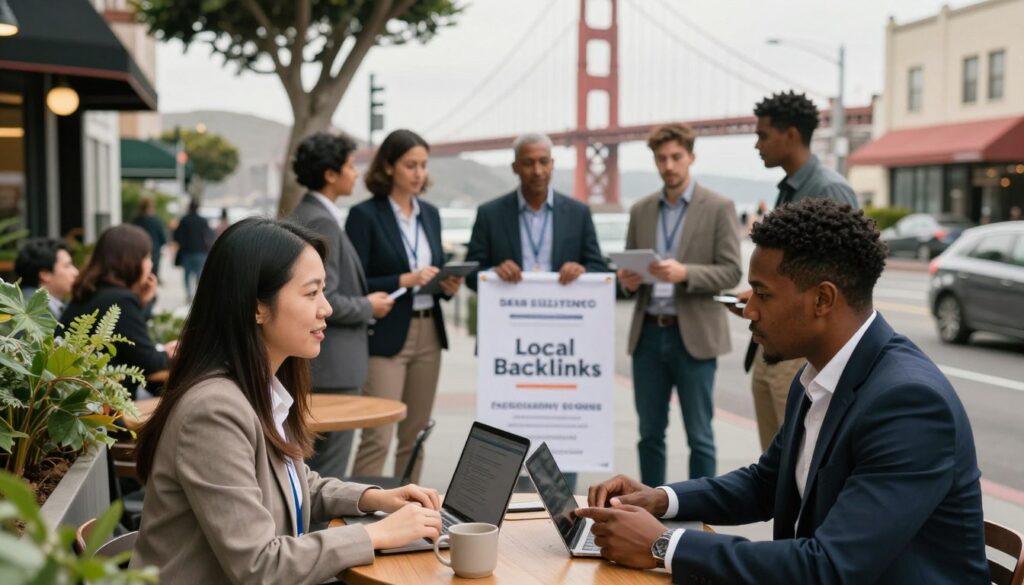
Build ties with nearby media and bloggers to make your business part of the city’s web of trust. Local backlinks act as credibility signals that tie your listing and services to the area. That helps search engines and users trust your pages and improves local results.
Outreach ideas that win links: offer expert quotes, write short how-tos, share local data, or supply a neighborhood resource page other websites will cite. Pitch clear, media-ready angles like community impact, safety tips, or a short case study that local media can use.
Sponsorships, charity drives, and event speaking often include links on organizer websites. These community activities create natural backlinks and referrals for businesses that show up offline and online.
| Action | Where to Target | Why It Helps | Quick Tip |
|---|---|---|---|
| Guest quote or short post | Local blogs, trade media | Adds topical backlinks and visibility | Keep piece 300–500 words |
| Sponsor an event | Community organizations | Often yields a sponsor link on event pages | Request a link in writing |
| Directory cleanup | Yelp, BBB, chamber sites | Consistent citations boost local trust | Complete every profile field |
| Local case study | Neighborhood media, partner sites | Provides sharable content and reference links | Include real data and photos |
Track link growth and referral traffic to measure results. Prioritize relevance and reputation over volume. Links from trusted San Francisco organizations carry more weight than many low-quality placements.
Conclusion
, Close the loop: make your site, Google Business profile, and content work together so local customers find you first. The full system combines keyword research tied to San Francisco intent, clear content that answers real search queries, a complete Business profile, fast technical performance, and trusted local backlinks.
Search behavior now spans maps, reviews, social, and multiple search engines, so work that improves one channel often lifts others. Results compound: technical fixes and better content make every future campaign — email, social, or organic — more productive.
Start today: audit your Google Business profile, fix NAP consistency, and map primary keywords to high-value service pages. Expect steady gains over months; professional support often ranges from $2,500–$5,000/month or $50–$150+/hour. A local coffee shop saw half its foot traffic from local searches after these steps, and a startup grew site traffic ~40% with focused content. Pick one area and keep improving to earn durable visibility.
FAQ
What makes local search in San Francisco more competitive than other markets?
How does organic search compare with paid advertising for Bay Area service businesses?
What does “local visibility” look like today for a neighborhood business?
What key on-page elements improve rankings across search engines?
How should businesses coordinate SEO and social channels for better visibility?
Where do I start with keyword research for a San Francisco audience?
How can I create neighborhood pages that actually drive leads?
What’s the best way to use title tags and meta descriptions for local pages?
How important is a Google Business profile for local search results?
How should businesses manage reviews and reputation online?
What technical fixes most improve user experience and rankings?
How can I improve page speed for visitors on phones and desktop?
What content approach avoids keyword stuffing but still ranks locally?
How do I earn local backlinks and mentions in the Bay Area?
Which directories and citations matter most for local trust?
How often should I update local pages and business listings?
What metrics should I track to measure local marketing success?
Can small businesses afford to compete online with larger Bay Area brands?

I am an SEO expert with over 7+ years of hands-on experience in search engine optimization, content strategy, and organic growth. I specialize in creating SEO-driven blog content that helps businesses improve search visibility, attract qualified traffic, and achieve sustainable rankings on Google. With a strong understanding of on-page SEO, keyword research, technical SEO, and content optimization, I focus on delivering data-backed, user-focused content that converts.
Related Posts

Boost Your Law Firm’s Online Visibility
What if the people who need your legal expertise the…

Optimize Your Law Practice with a Winning Lawyer SEO Strategy
What if your ideal clients couldn't find you when they…
Optimize Your Website for Search: A Guide to SEO
In today's digital landscape, having a website is just the…