In the realm of search engine optimization, a well-crafted meta title is crucial for enhancing SERP visibility. A meta title is the first impression users get when they search for something online, making it a vital component in driving traffic to your website.
A compelling meta title not only captures the essence of your webpage but also entices users to click through. With the Indian market being a significant hub for online searches, optimizing your meta titles for this demographic can significantly boost your website’s visibility.
By understanding the importance of meta titles and their ideal structure, you can improve your website’s search engine ranking and drive more traffic.
Key Takeaways
- Crafting a compelling meta title is essential for better SERP visibility.
- A well-written meta title can significantly improve click-through rates.
- Optimizing meta titles for the Indian market can boost website visibility.
- Understanding the ideal structure of meta titles is crucial for search engine optimization.
- A compelling meta title drives more traffic to your website.
Why Meta Titles Are the Gateway to Higher Search Rankings
The significance of meta titles in SEO cannot be overstated, as they are instrumental in capturing users’ attention in search engine results pages (SERPs). A meta title is essentially the title of a web page that appears in search engine results, making it a crucial element in determining click-through rates.
The First Impression Factor in Search Results
Meta titles are the first impression users get of a webpage in search results. A well-crafted meta title can entice users to click on the link, while a poorly written one can deter them. The title should be informative, yet engaging, providing a clear idea of what the webpage is about.
How Quality Meta Titles Influence User Behavior
Quality meta titles significantly influence user behavior by improving click-through rates and reducing bounce rates. By incorporating relevant keywords and making the title more descriptive, users are more likely to click on the link. This, in turn, can enhance search engine rankings, creating a positive feedback loop.
What Makes a Perfect Meta Title: Essential Elements
The meta title is a critical element in search engine optimization (SEO), directly influencing your site’s visibility and user engagement. A perfect meta title is not just about being concise; it’s about being descriptive and compelling enough to attract clicks.
The Ideal Structure and Format
An ideal meta title should have a clear and concise structure. It should include the primary keyword near the beginning to enhance search engine ranking. The title should be descriptive and attractive to encourage click-throughs. Here are some key elements to consider:
- Include the primary keyword near the beginning.
- Make sure it’s descriptive and attractive.
- Use a compelling tone to encourage click-throughs.
- Avoid keyword stuffing and ensure readability.
Character Limitations and Display Variations Across Devices
Meta titles have character limitations that vary across different devices. Generally, search engines display the first 55-60 characters of a meta title. It’s crucial to be concise while conveying the necessary information. Here are some tips to keep in mind:
- Keep your meta title within the 55-60 character limit.
- Ensure that your title is descriptive even when truncated.
- Test how your meta title appears on different devices.
By understanding these essential elements, you can craft meta titles that not only comply with search engine guidelines but also attract and engage your target audience effectively.
Meta Title Optimization for Indian Websites and Audiences
Crafting effective meta titles for Indian audiences involves understanding the intricacies of regional SEO and local preferences. Optimizing meta titles for the Indian market is not just about translation; it’s about cultural and linguistic adaptation.
Regional SEO Tactics That Work in the Indian Market
Indian users respond better to content that is tailored to their local context. This includes using region-specific keywords, understanding local search trends, and being aware of the cultural nuances that influence search behavior.
Key regional SEO tactics include:
- Using local language keywords
- Understanding regional search trends
- Adapting content to local cultural contexts
Incorporating Local Terms and Cultural Context
Incorporating local terms and cultural context into meta titles can significantly improve their effectiveness. This involves more than just using the local language; it requires an understanding of local idioms, expressions, and cultural references.
For instance, using festivals or local events in meta titles can make them more relatable to Indian users.
Urban vs. Rural Targeting Considerations
When targeting Indian audiences, it’s crucial to consider the differences between urban and rural populations. Urban areas tend to have higher internet penetration and more exposure to global trends, while rural areas may require more localized content.
Multilingual Approach for Different Indian States
India is a multilingual country with numerous languages and dialects. A successful meta title optimization strategy involves catering to these linguistic differences by creating content in multiple languages.

| Region | Preferred Language | SEO Considerations |
|---|---|---|
| North India | Hindi, English | Use Hindi keywords, consider cultural events like Navratri |
| South India | Tamil, Telugu, Malayalam, Kannada | Use local language keywords, consider regional festivals |
| East India | Bengali, English | Use Bengali keywords, consider cultural events like Durga Puja |
Strategic Keyword Research for Compelling Meta Titles
Strategic keyword research is the backbone of creating meta titles that resonate with Indian users. By understanding what keywords are most relevant and frequently searched, businesses can craft meta titles that not only attract clicks but also align with the search intent of their target audience.
Finding High-Value Keywords That Resonate with Indian Users
To find high-value keywords, it’s essential to understand the search behavior and preferences of Indian users. This involves using tools that provide insights into local search trends, colloquialisms, and regional languages. Long-tail keywords often prove particularly effective as they are more specific and less competitive.
For instance, instead of targeting a broad keyword like “best smartphones,” a more effective meta title might incorporate a long-tail keyword such as “best smartphones under ₹20,000 in India.” This approach not only targets specific search queries but also caters to the budget-conscious Indian consumer.
Competitive Analysis for Title Differentiation
Conducting a competitive analysis is crucial for differentiating your meta titles in a crowded Indian market. By analyzing the meta titles of competitors, businesses can identify gaps and opportunities to stand out. Tools like SEMrush and Ahrefs can provide valuable insights into competitor keyword strategies.
A competitive analysis can reveal patterns in keyword usage and help in crafting unique meta titles that avoid duplication and enhance visibility.
Tools Specifically Useful for Indian Market Research
Several tools are particularly useful for conducting keyword research in the Indian market. These include:
- Google Trends
- SEMrush
- Ahrefs
- Keyword Planner
These tools help in understanding local search trends and identifying relevant keywords.
Seasonal Keyword Trends in India
India’s diverse cultural and festive landscape significantly influences search trends. Understanding seasonal keyword trends can help businesses tailor their meta titles to capitalize on timely opportunities. For example, during the Diwali season, keywords related to “Diwali gifts” or “Diwali offers” see a significant surge.
| Season | Popular Keywords | Meta Title Example |
|---|---|---|
| Diwali | Diwali gifts, Diwali offers | “Exclusive Diwali Gifts for Loved Ones – Best Offers Inside!” |
| Navratri | Navratri dresses, Navratri events | “Stunning Navratri Dresses for Women – Shop Now!” |
Psychology Behind Meta Titles That Generate Clicks
The art of crafting meta titles that generate clicks is deeply rooted in understanding human psychology. A well-crafted meta title can significantly influence user behavior, driving higher click-through rates.
Emotional Triggers That Work in Indian Context
In the Indian market, emotional triggers such as nostalgia, family values, and aspirational living can be particularly effective. By tapping into these emotions, meta titles can create a deeper connection with potential customers.
Creating Urgency and Value Proposition
Crafting meta titles that create a sense of urgency or highlight a unique value proposition can significantly boost click-through rates. Using phrases like “Limited Time Offer” or “Exclusive Deal” can motivate users to click.
Cultural Sensitivity in Persuasive Language
It’s crucial to ensure that the language used is culturally sensitive. For instance, using local festivals or cultural references can make meta titles more relatable and engaging for Indian users.
Trust Signals That Matter to Indian Consumers
Trust signals such as “Verified” or “Certified” can enhance credibility. Indian consumers often look for reassurance, so incorporating these trust signals into meta titles can be beneficial.
The Science of Meta Title Length and Structure
The length and structure of a meta title are crucial elements that can make or break its effectiveness in search engine results. A well-crafted meta title should be both informative and concise, making it a vital component of SEO strategy.
Finding the Sweet Spot Between Completeness and Brevity
When it comes to meta title length, there’s a fine line between providing enough information and overwhelming the user. Google typically displays the first 55-60 characters of a meta title, so it’s essential to prioritize your keywords and main message within this limit. Here are some key considerations:
- Keep your meta title concise, ideally under 60 characters.
- Prioritize your main keywords at the beginning of the title.
- Ensure your title is descriptive and accurately reflects the content.
By finding this balance, you can create meta titles that are both informative and compelling, driving higher click-through rates.
Formatting Techniques That Catch the Eye
The structure and formatting of your meta title can also significantly impact its effectiveness. Using the right formatting techniques can make your title stand out in search engine results. Consider the following:
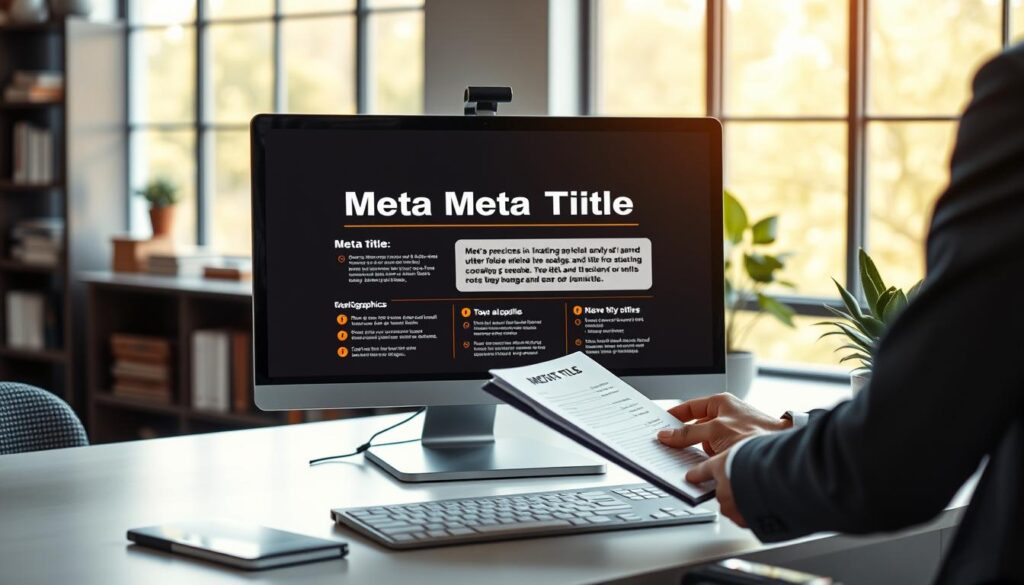
- Use numbers and special characters to make your title more compelling.
- Incorporate emotional triggers and action-oriented language.
- Use pipes (|) or hyphens (-) to separate different parts of your title.
By applying these formatting techniques, you can create meta titles that grab the user’s attention and drive more clicks to your site.
7 Meta Title Mistakes That Kill Your Click-Through Rates
The effectiveness of your meta title can make or break your click-through rates, and understanding the pitfalls is essential for success. A well-crafted meta title not only attracts users but also significantly impacts your search engine rankings.
Let’s explore some common mistakes that can negatively affect your click-through rates and overall SEO performance.
Overpromising and Underdelivering
One of the most significant mistakes is overpromising and underdelivering. When your meta title exaggerates the content of your page, it leads to user dissatisfaction and increased bounce rates. For instance, a title like “The Ultimate Weight Loss Secret” that doesn’t deliver on its promise can harm your site’s credibility.
Best Practice: Ensure your meta title accurately reflects the content of your page.
Generic Titles That Fail to Stand Out
Using generic titles that lack distinctiveness can make your page blend in with the competition. Titles like “Learn More About Our Services” are too vague and fail to capture the user’s attention. Instead, use descriptive and unique titles that highlight what sets your content apart.
Example: “Discover How Our Innovative Services Can Transform Your Business”
Technical Errors That Harm Rankings
Technical errors in your meta titles, such as duplication or incorrect formatting, can harm your search engine rankings. Duplicate titles confuse search engines and dilute the impact of your SEO efforts. Ensure each title is unique and follows the recommended character limits.
| Technical Error | Impact | Solution |
|---|---|---|
| Duplicate Titles | Confuses search engines, dilutes SEO impact | Use unique titles for each page |
| Incorrect Formatting | Can lead to truncation or misinterpretation | Follow recommended character limits and formatting guidelines |
By avoiding these common meta title mistakes, you can significantly improve your click-through rates and enhance your website’s overall SEO performance.
Industry-Specific Meta Title Templates That Convert
Crafting effective meta titles is crucial for any industry, and using industry-specific templates can significantly boost conversion rates. A well-structured meta title not only captures the user’s attention but also communicates the value proposition of the page.
Different industries have unique requirements when it comes to meta titles. For instance, e-commerce sites need to highlight product names, prices, and availability, while service-based businesses focus on showcasing their services and unique selling points.
E-commerce and Retail Title Formulas
E-commerce and retail businesses can benefit from meta title templates that include the product name, brand, and key attributes. For example, “Buy [Product Name] | [Brand Name] | [Key Attribute]” is an effective template. This structure helps in highlighting the product and its unique features, making it more appealing to potential customers.
Service Business and B2B Approaches
For service businesses and B2B companies, meta titles should emphasize the service offered, the target audience, and the benefits. A template like “[Service] for [Target Audience] | [Benefits]” can be highly effective. This approach helps in directly addressing the needs of the target audience and showcasing the value proposition.
Media, Entertainment, and Content Site Strategies
Media, entertainment, and content sites can leverage meta title templates that include the content title, genre, and key information. For instance, “[Content Title] | [Genre] | [Key Information]” is a useful template. This structure aids in capturing the user’s interest by providing relevant details about the content.
By using industry-specific meta title templates, businesses can improve their search engine rankings and increase click-through rates. It’s essential to test different templates and analyze their performance to find the most effective strategy.
Mobile-First Meta Title Optimization Techniques
Mobile-first indexing has changed the way we approach meta title optimization, making it essential to adapt our strategies for smaller screens. As the majority of users now access websites through mobile devices, optimizing meta titles for mobile has become crucial for search engine visibility.
Adapting to Smaller Screens and Featured Snippets
When optimizing meta titles for mobile devices, it’s vital to consider the limited screen space. Shorter meta titles are more effective on mobile devices, as they are less likely to be truncated. Aim for a meta title length of around 50-60 characters to ensure it displays fully on most mobile screens.
Featured snippets are another critical aspect of mobile search. To optimize for featured snippets, focus on providing clear, concise answers to common questions related to your content. This can increase your chances of being featured in the coveted “position zero” on search engine results pages (SERPs).

Voice Search Considerations for Indian Accents and Dialects
With the rise of voice search, optimizing meta titles for voice queries has become increasingly important. In India, where diverse accents and dialects are prevalent, it’s crucial to consider how these variations impact voice search.
To optimize for voice search in India, use natural language and long-tail keywords that reflect how people speak. Consider incorporating regional terms and phrases to better match voice queries. For example, using Hindi or other local language keywords can help your content rank better for voice searches conducted in those languages.
| Optimization Technique | Description | Benefit |
|---|---|---|
| Shorter Meta Titles | Aim for 50-60 characters | Less truncation on mobile screens |
| Featured Snippet Optimization | Provide clear, concise answers | Increased visibility in SERPs |
| Voice Search Optimization | Use natural language and long-tail keywords | Better ranking for voice queries |
How to Test and Refine Your Meta Titles for Maximum Impact
To maximize the impact of your meta titles, it’s essential to test and refine them regularly. This process involves understanding your audience, analyzing competitors, and using the right tools to measure performance.
Setting Up Systematic A/B Testing
A/B testing is a powerful method to determine which meta titles resonate best with your target audience. By creating two versions of a meta title and comparing their performance, you can make data-driven decisions.
To set up A/B testing, start by identifying the pages that need title optimization. Use tools like Google Optimize or VWO to create different title variations. Ensure that the testing period is long enough to gather significant data.
Measuring Success Beyond Click-Through Rates
While click-through rates (CTR) are a crucial metric, they don’t tell the whole story. To truly measure the success of your meta titles, you need to look at other indicators such as conversion rates, bounce rates, and average session duration.
Analyzing these metrics helps you understand how well your meta titles are aligning with user intent and expectations. Tools like Google Analytics can provide valuable insights into user behavior.
Tools That Support Indian Analytics Integration
For Indian websites, integrating local analytics tools can provide more accurate data. Tools like Google Analytics can be configured to track region-specific metrics. Additionally, consider using tools that support local languages and dialects.
Benchmarking Against Local Competitors
Benchmarking your meta title performance against local competitors can offer valuable insights. Identify key competitors and analyze their title strategies. Use this information to refine your own titles and gain a competitive edge.
| Metric | Your Website | Competitor 1 | Competitor 2 |
|---|---|---|---|
| CTR | 5% | 7% | 4% |
| Conversion Rate | 2% | 3% | 1.5% |
| Bounce Rate | 60% | 55% | 65% |
Advanced Meta Title Strategies for 2026 and Beyond
As we step into 2023, the digital landscape continues to evolve, demanding more sophisticated meta title strategies. The importance of meta titles in search engine optimization (SEO) cannot be overstated, as they serve as the first point of contact between a user and a website in search engine results pages (SERPs).
AI-Powered Title Generation and Analysis is revolutionizing the way meta titles are created and optimized. AI tools can analyze vast amounts of data to suggest titles that are not only relevant but also highly engaging. Some key benefits include:
- Enhanced creativity through AI-driven suggestions
- Data-backed decisions for title optimization
- Personalization based on user behavior and preferences
AI-Powered Title Generation and Analysis
The integration of AI in meta title generation allows for a more nuanced understanding of what works best in different contexts. By analyzing successful titles across various industries, AI can identify patterns and suggest improvements. For instance, AI can help in:
- Identifying high-performing keywords and phrases
- Analyzing competitor titles to find differentiation opportunities
- Suggesting emotional triggers that resonate with the target audience
Adapting to Google’s Algorithm Changes in the Indian Market
Google’s algorithm updates can significantly impact how meta titles are displayed and ranked. In the Indian market, where search behaviors and preferences can vary greatly, adapting to these changes is crucial. Key considerations include:
- Understanding the impact of algorithm updates on meta title display
- Adjusting title strategies to comply with the latest best practices
- Focusing on user experience and relevance in title crafting
By staying informed about the latest algorithm changes and leveraging AI-powered tools, businesses in India can enhance their SEO strategies and improve their online visibility.
Conclusion
Effective meta titles are crucial for improving SERP visibility and driving traffic to your website. By understanding the Indian market and incorporating relevant keywords, you can create titles that resonate with your target audience.
Following best practices for meta title creation, such as keeping titles concise and descriptive, can significantly enhance your click-through rates. It’s also essential to consider psychological triggers that work in the Indian context.
By implementing these strategies and continually testing and refining your meta titles, you can stay ahead of the competition and improve your online presence. With the right approach, you can maximize your meta title’s potential and drive more traffic to your website.
FAQ
What is the ideal length of a meta title?
How do I optimize meta titles for the Indian market?
What are the most common meta title mistakes that harm click-through rates?
How can I test and refine my meta titles for maximum impact?
What is the role of keyword research in crafting compelling meta titles?
How do I adapt meta titles to smaller screens and featured snippets?
What are the best practices for meta title optimization in e-commerce and retail?
How can AI-powered title generation and analysis improve my meta titles?

I am an SEO expert with over 7+ years of hands-on experience in search engine optimization, content strategy, and organic growth. I specialize in creating SEO-driven blog content that helps businesses improve search visibility, attract qualified traffic, and achieve sustainable rankings on Google. With a strong understanding of on-page SEO, keyword research, technical SEO, and content optimization, I focus on delivering data-backed, user-focused content that converts.
Related Posts

Get Expert SEO Service in Ishakpur | Call +91 8839797476
Boost your online presence with expert search engine optimization tailored…
Boost Your Website’s Visibility with These On-Page SEO Tips
Have you ever wondered why some websites climb to the…
Professional Adult Ecommerce Websites SEO Services
The adult ecommerce industry generates billions in revenue annually, yet…