Have you ever wondered why some local shops always appear first when you search online while others seem to vanish? It is not just luck or a big budget that keeps them on the front page. Instead, these companies use specific tools to ensure local customers can find them easily.
Boosting your digital footprint is the most effective way to reach new neighbors and increase your revenue. When you master these strategies, you stop chasing customers and start letting them find you. This guide explores how effective marketing transforms your brand from invisible to indispensable.
We will walk you through the top seo techniques for small businesses that provide the best results today. From optimizing your Google profile to building trust with high-quality content, we have you covered. Let’s dive into how you can grow your presence and thrive in a crowded marketplace.
Key Takeaways
- Boost your ranking on major search engines to gain visibility.
- Connect with local customers right in your neighborhood.
- Develop long-term brand credibility and authority.
- Create a sustainable flow of organic leads and inquiries.
- Maximize your marketing budget with cost-effective digital strategies.
- Improve user experience on your site to keep visitors engaged.
Why SEO Is Your Small Business’s Secret Growth Engine
SEO is the unsung hero for small businesses looking to grow their online footprint without hefty marketing budgets. In a digital landscape dominated by larger corporations, affordable SEO strategies can be the key to leveling the playing field.
For small businesses, having a robust online presence is no longer a luxury; it’s a necessity. With most consumers turning to search engines to find local products and services, SEO for local businesses becomes crucial. It helps your business appear in search results, making it more visible to potential customers.

Here are some compelling reasons why SEO should be at the heart of your growth strategy:
- Increased Visibility: SEO helps your business rank higher in search engine results pages (SERPs), making it more visible to potential customers.
- Targeted Traffic: By optimizing for specific keywords, you attract visitors who are actively searching for your products or services.
- Cost-Effectiveness: Compared to traditional advertising methods, SEO is a cost-effective way to drive traffic to your website.
- Competitive Advantage: By implementing effective SEO strategies, small businesses can compete more effectively with larger corporations.
To get started with SEO, it’s essential to understand that it’s not a one-time task but an ongoing process. It involves continuous optimization and improvement to keep up with the ever-changing algorithms of search engines.
By focusing on affordable SEO strategies and SEO for local businesses, you can create a robust online presence that drives growth and helps your business thrive in a competitive market.
Top SEO Techniques for Small Businesses: Your Action Plan
In today’s digital landscape, mastering top SEO techniques is a game-changer for small businesses.
To stay ahead of the competition, small businesses must adopt a multi-faceted SEO strategy. This includes on-page SEO tips that can significantly improve your website’s visibility and drive more qualified leads.
One of the foundational elements of SEO is keyword research. Understanding what your target audience is searching for allows you to tailor your content to meet their needs. Tools like Google Keyword Planner and Ahrefs can help you identify relevant keywords.
“SEO is not just about search engines; it’s about understanding your customers and creating content that resonates with them.”
Here are some top SEO techniques for small businesses:
- Optimize your website’s loading speed to improve user experience and search engine rankings.
- Use high-quality, relevant images and optimize them with alt tags and descriptive text.
- Create content that is informative, engaging, and regularly updated.
- Build high-quality backlinks from authoritative sources to increase your website’s authority.
A well-structured website is crucial for both users and search engines. Ensure your site is mobile-friendly, has a clear hierarchy, and is easy to navigate.
| SEO Technique | Description | Benefit |
|---|---|---|
| On-Page Optimization | Optimizing elements on your website such as title tags, meta descriptions, and headings. | Improves search engine rankings and click-through rates. |
| Content Creation | Developing high-quality, keyword-rich content that resonates with your target audience. | Increases engagement and drives more qualified leads. |
| Link Building | Acquiring high-quality backlinks from authoritative sources. | Boosts your website’s authority and search engine rankings. |
By implementing these top SEO techniques, small businesses can significantly enhance their online presence and drive growth.
Master Keyword Research Without Breaking the Bank
Unlock the power of keyword research without draining your budget. Effective keyword research is the cornerstone of any successful SEO strategy, allowing small businesses to understand their audience, identify relevant search terms, and optimize their content accordingly.
With the right tools and techniques, you can conduct thorough keyword research without breaking the bank. This section will explore budget-friendly keyword research tools, tips for finding high-converting long-tail keywords, and strategies for analyzing your competitors’ keyword strategies.
Best Keyword Research Tools for Budget-Conscious Businesses
Choosing the right keyword research tool can be daunting, especially for small businesses on a tight budget. Fortunately, there are both free and premium tools available that can deliver professional results without excessive costs.
Free Tools That Deliver Professional Results
Several free keyword research tools offer robust features that can help you get started with your SEO efforts. Some of the most popular options include:
- Google Keyword Planner: A powerful tool for identifying keywords and estimating search volume.
- Ubersuggest: Provides keyword suggestions, search volume data, and competitor analysis.
- Keyword Surfer: A browser extension that offers keyword data and content ideas.
These tools can provide valuable insights into your target audience’s search behavior and help you identify relevant keywords for your content.
Affordable Premium Options Worth the Investment
While free tools are a great starting point, premium keyword research tools can offer more advanced features and data. Some affordable options include:
- Ahrefs: Offers comprehensive keyword research, backlink analysis, and content optimization tools.
- SEMrush: Provides keyword research, competitor analysis, and technical SEO audits.
- Moz Keyword Explorer: Delivers keyword suggestions, search volume data, and SERP analysis.
These premium tools can help you refine your keyword strategy and gain a competitive edge in your market.

Finding High-Converting Long-Tail Keywords
Long-tail keywords are more specific phrases that have lower search volumes but higher conversion rates. Identifying the right long-tail keywords can help you attract targeted traffic and improve your SEO results.
To find high-converting long-tail keywords, consider the following strategies:
- Use keyword research tools to identify relevant long-tail phrases.
- Analyze your website’s search data to identify patterns and trends.
- Conduct competitor research to identify gaps in their keyword strategies.
By targeting the right long-tail keywords, you can increase your chances of ranking higher in search engine results and driving more conversions.
Steal Smart Ideas from Competitor Keyword Analysis
Analyzing your competitors’ keyword strategies can provide valuable insights into their SEO efforts and help you identify opportunities to improve your own strategy.
To conduct competitor keyword analysis, follow these steps:
- Identify your main competitors in the search engine results.
- Use tools like Ahrefs or SEMrush to analyze their keyword profiles.
- Look for gaps in their keyword strategies that you can exploit.
By stealing smart ideas from your competitors, you can refine your keyword strategy and stay ahead in the competition.
Essential On-Page SEO Tips for Maximum Visibility
To stand out in the competitive online landscape, implementing effective on-page SEO strategies is key. On-page SEO involves optimizing individual web pages to rank higher and earn more relevant traffic. This section will guide you through the essential on-page SEO tips to maximize your website’s visibility.
Craft Compelling Title Tags and Meta Descriptions
Title tags and meta descriptions are crucial elements that search engines display in their results pages. A well-crafted title tag should be descriptive, yet concise, ideally under 60 characters. It should include the primary keyword for the page. A meta description provides a summary of the page’s content and should entice users to click through. It should be around 155-160 characters and include the target keyword.
For example, a title tag for a page about “on-page SEO tips” could be “10 Essential On-Page SEO Tips for Better Rankings.” The meta description could be “Discover the top on-page SEO tips to improve your website’s visibility and drive more traffic. Learn how to optimize your title tags, meta descriptions, and more.”
Structure Your Content for Search Engines and Humans
Structuring your content is vital for both user experience and search engine optimization. It involves organizing your content with header tags (H1, H2, H3, etc.), which helps search engines understand the hierarchy and context of your content.
Header Tag Hierarchy Best Practices
Using header tags correctly can improve your content’s readability and SEO. The H1 tag should be used for the main title, while H2 and H3 tags are used for subheadings. Here’s an example of how to structure header tags:
- H1: Main Title
- H2: Main Subheading
- H3: Sub-subheading
Content Length and Quality Standards
The length and quality of your content are significant factors in SEO. While there’s no one-size-fits-all word count, comprehensive content that covers a topic thoroughly tends to perform better. Aim for content that is at least 500 words, but prioritize quality over quantity. Ensure your content is engaging, informative, and provides value to your readers.
| Content Aspect | Best Practice |
|---|---|
| Title Tag | Under 60 characters, includes primary keyword |
| Meta Description | 155-160 characters, includes target keyword |
| Header Tags | Use H1, H2, H3 for hierarchy |
| Content Length | At least 500 words, prioritize quality |
Optimize Images to Boost Page Performance
Images can significantly impact your page’s performance and SEO. Optimizing images involves reducing their file size without compromising quality. Use tools like TinyPNG or ImageOptim to compress images. Additionally, use descriptive alt tags that include target keywords.

Build a Strategic Internal Linking Framework
Internal linking helps search engines understand your website’s structure and content hierarchy. It also aids in user navigation, improving the overall user experience. Create a strategic internal linking framework by linking to relevant and related content within your website.
For instance, if you have a blog post on “SEO Techniques,” you can link to it from another relevant post, using descriptive anchor text like “learn more about SEO techniques.”
Local Search Optimization: Dominate Your Geographic Market
For small businesses targeting a local audience, dominating the geographic market is crucial for growth and visibility. Local search optimization is a powerful strategy that helps businesses appear in search results when potential customers are looking for products or services in their area.
Why is local search optimization important? It allows businesses to reach customers at the exact moment they are searching for something, increasing the likelihood of conversion. By optimizing for local search, small businesses can compete more effectively with larger companies and establish a strong presence in their community.
Google My Business Optimization for Local Dominance
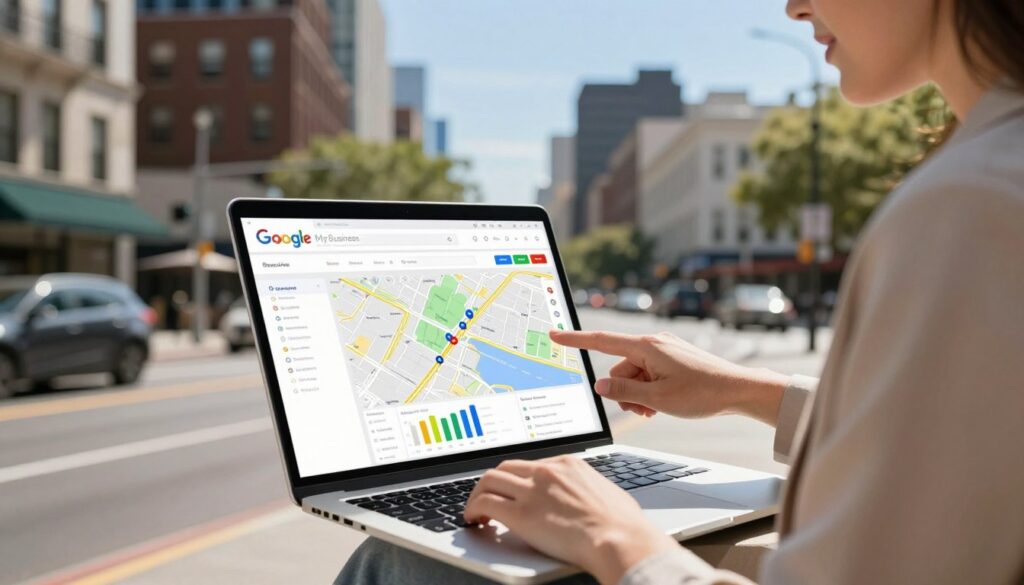
One of the most critical components of local search optimization is Google My Business (GMB) optimization. GMB is a free tool that allows businesses to manage their online presence across Google, including Search and Maps.
Complete Your Profile for Maximum Impact
To maximize the effectiveness of your GMB listing, it’s essential to complete your profile fully. This includes:
- Accurate and up-to-date business hours
- High-quality photos of your business
- A detailed business description
- Relevant categories and keywords
Post Regular Updates and Offers
Posting regular updates and offers on your GMB listing can help keep your customers engaged and attract new ones. This can include:
- Special promotions and discounts
- New product or service announcements
- Events and workshops
Build Consistent Local Citations Across Directories
Local citations are online mentions of your business’s name, address, and phone number (NAP) on other websites, directories, and platforms. Building consistent local citations is crucial for improving your business’s visibility in local search results.
| Directory | Description | Importance |
|---|---|---|
| Yelp | A popular review site for businesses | High |
| Bing Places | Microsoft’s version of Google My Business | Medium |
| Local Chamber of Commerce | A directory listing for local businesses | High |
Generate Authentic Customer Reviews at Scale
Customer reviews play a significant role in local search optimization. Positive reviews can improve your business’s visibility and credibility, while negative reviews can deter potential customers.
To generate authentic customer reviews at scale, focus on providing excellent customer service and encourage satisfied customers to leave reviews. You can do this by:
- Adding a review link to your email signature
- Including a call-to-action on your website
- Using review management tools to streamline the process
Affordable SEO Strategies: Smart Link Building Tactics
Link building doesn’t have to break the bank; there are smart tactics for small businesses. Effective link building is a cornerstone of SEO that can significantly enhance your online visibility and drive more traffic to your website.
Leverage Guest Blogging for Quality Backlinks
Guest blogging is a powerful way to build high-quality backlinks. By writing informative and engaging content for other reputable websites, you can establish your authority in your niche and gain valuable links back to your site.
- Identify relevant blogs in your industry that accept guest posts.
- Craft well-researched, high-quality content that adds value to the host site.
- Include a link back to your website in your author bio or within the content where relevant.
Partner with Local Businesses for Mutual Links
Partnering with local businesses can be a win-win for link building. By collaborating on content or projects, you can earn links from local directories, blogs, or websites.
Benefits of local partnerships:
| Benefit | Description |
|---|---|
| Increased Local Visibility | Being mentioned on local business websites can boost your local search rankings. |
| Mutual Linking Opportunities | Exchange links with partners to strengthen your backlink profile. |
| Community Engagement | Builds trust and reputation within your local community. |
Create Content That Naturally Attracts Links
Creating linkable content is a sustainable link building strategy. Focus on producing high-quality, informative, and engaging content that others will want to link to.
Resource Pages and Ultimate Guides
Resource pages and ultimate guides are excellent examples of linkable content. They provide comprehensive information on a specific topic, making them valuable resources for readers.
Local Data and Original Research
Conducting original research or compiling local data can attract links from authoritative sites. This type of content is unique and provides valuable insights that others may reference.
For instance, a study on local consumer trends or a guide to local SEO best practices can attract significant attention and links.

By implementing these smart link building tactics, small businesses can enhance their SEO efforts without straining their budget. Remember, the key is to focus on quality over quantity and to always provide value to your audience and partners.
Technical SEO Fundamentals Every Small Business Needs
Technical SEO is crucial for small businesses aiming to improve their website’s visibility and drive more traffic. A technically sound website not only enhances user experience but also improves search engine rankings.
Ensure Mobile-Friendly Design and Functionality
In today’s mobile-first world, having a mobile-friendly website is no longer optional. Google’s algorithms prioritize mobile-friendly sites, making it essential for small businesses to ensure their websites are responsive and provide a seamless user experience across all devices.
Key aspects of a mobile-friendly design include:
- Responsive design that adapts to different screen sizes
- Fast loading speeds on mobile devices
- Easy navigation and clear call-to-actions
Accelerate Site Speed for Better Rankings
Site speed is a critical factor in SEO, as it directly impacts user experience and search engine rankings. Slow-loading websites can lead to high bounce rates and lower rankings.
Compress Images and Enable Caching
Compressing images reduces file size, which in turn accelerates page loading times. Enabling caching allows frequently-used resources to be stored locally in a user’s browser, further improving load times.
Minimize Code and Reduce Server Response Time
Minimizing code involves removing unnecessary characters and whitespace from HTML, CSS, and JavaScript files. Reducing server response time can be achieved by optimizing server configuration and leveraging content delivery networks (CDNs).
| Optimization Technique | Description | Impact on Site Speed |
|---|---|---|
| Image Compression | Reducing file size of images | High |
| Browser Caching | Storing frequently-used resources locally | High |
| Code Minification | Removing unnecessary code characters | Medium |
| Server Response Time Optimization | Improving server configuration and using CDNs | Medium |
Fix Crawl Errors and Broken Links
Crawl errors and broken links can significantly hinder a website’s SEO performance. Regularly monitoring and fixing these issues is crucial for maintaining a healthy website.
Best practices include:
- Regularly checking for crawl errors in Google Search Console
- Fixing broken links and redirects
- Ensuring proper URL structure and internal linking
Your Complete Website Audit Checklist
A comprehensive website audit checklist is your roadmap to enhancing your site’s search engine visibility. It helps identify areas of improvement, ensuring your website is optimized for both users and search engines.
On-Page SEO Audit Essentials
On-page SEO elements are crucial for search engine ranking and user experience. Here are key areas to focus on:
Title Tags, Meta Descriptions, and Headers
Ensure each page has a unique title tag that accurately describes its content. Meta descriptions should be compelling and within the recommended length to avoid truncation in search results.
- Use header tags (H1, H2, H3) to structure content logically.
- Include target keywords in title tags and headers where appropriate.
Content Quality and Keyword Optimization
High-quality, engaging content is vital for SEO. Focus on:
- Creating content that provides value to your audience.
- Optimizing content with relevant keywords without overdoing it.
Technical Audit Must-Check Items
Technical SEO is about improving your site’s backend to enhance crawling, indexing, and overall performance.
Site Speed and Mobile Usability
Site speed is a critical ranking factor. Ensure your site loads quickly and is mobile-friendly.
| Factor | Impact on SEO | Action |
|---|---|---|
| Page Load Time | Slow sites are penalized | Optimize images, leverage caching |
| Mobile Usability | Poor usability affects rankings | Ensure responsive design |
XML Sitemaps and Robots.txt Files
These files help search engines understand your site’s structure.
- Ensure your XML sitemap is up-to-date and submitted to Google Search Console.
- Use robots.txt to guide crawlers on how to crawl your site.
Backlink Profile and Off-Page Factors
Your backlink profile is a significant factor in SEO. Focus on acquiring high-quality backlinks from authoritative sites.
Regularly auditing your backlink profile helps identify and disavow toxic links that could harm your site’s ranking.
Track and Measure Your SEO Performance
As you implement top SEO techniques for small businesses, monitoring your progress is vital to achieving your goals. Tracking your SEO performance helps you understand what’s working and what needs improvement, allowing you to make data-driven decisions.
Critical SEO Metrics to Monitor Monthly
To gauge the effectiveness of your SEO strategy, focus on the following key metrics:
- Organic Traffic: The number of visitors coming to your site from search engines.
- Keyword Rankings: Your position in search engine results for target keywords.
- Conversion Rate: The percentage of visitors who complete a desired action.
- Bounce Rate: The percentage of visitors who leave your site without taking further action.
| Metric | Description | Why It Matters |
|---|---|---|
| Organic Traffic | Visitors from search engines | Indicates SEO effectiveness |
| Keyword Rankings | Position in search results | Affects visibility and traffic |
| Conversion Rate | Percentage of visitors completing a goal | Measures the success of your SEO in driving business outcomes |
Free Analytics Tools for Small Business Budgets
Utilizing the right tools is crucial for effective SEO monitoring. Here are some free resources to get you started:
Google Analytics and Google Search Console Setup
Google Analytics provides insights into your website’s traffic, engagement, and conversion metrics. Google Search Console helps you understand your site’s search engine presence, including keyword rankings and technical SEO issues.
Besides Google’s offerings, other free tools can enhance your SEO tracking:
- Ahrefs Webmaster Tools: Offers insights into backlinks and keyword rankings.
- SEMrush SEO Toolkit: Provides limited but useful SEO audits and insights.
Conclusion
By implementing the top SEO techniques outlined in this article, small businesses can drive growth, increase online visibility, and attract more customers. Affordable SEO strategies, such as mastering keyword research and leveraging local search optimization, can help businesses compete with larger competitors.
Local search optimization is crucial for businesses that serve a specific geographic area. By optimizing your website and online presence for local search, you can increase your chances of appearing in search results and attracting local customers.
By combining these strategies with technical SEO fundamentals, such as ensuring mobile-friendliness and accelerating site speed, small businesses can improve their online presence and drive more conversions. Take the first step towards improving your SEO today and watch your business grow.
FAQ
What are the most effective top SEO techniques for small businesses to start seeing real growth?
The most effective top SEO techniques for small businesses involve a combination of high-quality content creation and local search optimization. Start by claiming and optimizing your Google Business Profile, ensuring your site is mobile-friendly, and focusing on on-page SEO tips like optimizing your title tags and headers. By providing genuine value to your readers and staying technically sound, you can compete with much larger brands in search rankings.
Which keyword research tools are best for businesses on a tight budget?
You don’t need a massive budget to find winning keywords! While premium platforms like Semrush and Ahrefs offer incredible depth, you can get professional results using free keyword research tools like Google Keyword Planner or AnswerThePublic. These tools help you discover the specific questions your customers are asking, allowing you to build affordable SEO strategies around high-converting long-tail keywords.
How does Google My Business optimization help my local rankings?
Google My Business optimization (now known as Google Business Profile) is the single most important factor for SEO for local businesses. By completing your profile, adding high-resolution photos, and posting regular updates, you tell Google exactly where you are and what you offer. This increases your chances of appearing in the “Local Pack,” which is the map section at the top of search results that drives the most foot traffic and calls.
Can you provide a quick website audit checklist for a small business owner?
Absolutely! Your website audit checklist should begin with checking your site speed using Google PageSpeed Insights and ensuring your site is fully responsive on mobile devices. Next, look for broken links and “404 errors” that frustrate users. Finally, verify that every page has a unique title tag, a clear H1 header, and that your XML sitemap is correctly submitted to Google Search Console for proper indexing.
What are some affordable SEO strategies for building high-quality backlinks?
Some of the best link building tactics for small businesses are based on local relationships. You can partner with local non-profits for event sponsorships or write guest posts for industry blogs like HubSpot or Social Media Examiner. Another great strategy is to create “linkable assets,” such as original research or ultimate guides, which naturally attract links from other websites looking for credible sources to reference.
How often should I monitor my local search optimization performance?
We recommend a deep dive into your metrics at least once a month. Use Google Analytics to see how much traffic is coming from organic search and monitor Google Search Console to see which keywords are bringing people to your site. Keeping a close eye on your local search optimization performance allows you to pivot quickly if you notice a drop in rankings or a new competitor entering your geographic market.

I am an SEO expert with over 7+ years of hands-on experience in search engine optimization, content strategy, and organic growth. I specialize in creating SEO-driven blog content that helps businesses improve search visibility, attract qualified traffic, and achieve sustainable rankings on Google. With a strong understanding of on-page SEO, keyword research, technical SEO, and content optimization, I focus on delivering data-backed, user-focused content that converts.
Related Posts

Boost Your Online Presence with SEO Service in Gujarbadiya
In today's digital landscape, a strong online presence is vital…

SEO Service in Sawariya Seth (Mandpiya) | Call +91 8839797476
Welcome to our SEO solutions in Sawariya Seth (Mandhfia), where…

Get Expert SEO Service in Nibahyega | Call +91 8839797476
Are you looking for a trusted partner to boost your…